Devotion – Luke 8

S – For nothing is concealed that won’t be revealed, and nothing hidden that won’t be made known and brought to light. 18 Therefore take care how you listen. For whoever has, more will be given to him; and whoever does not have, even what he thinks he has will be taken away from him.”

 Luke 8:17–18 CSB

O – Commentary: “…a person is not given “the secrets of the kingdom of God” (8:10) in order to keep them secret. The disciples were to make known the things Jesus was telling them. The people who followed Jesus were to consider carefully (v. 18) how they listened. If they heard and responded with genuine belief (cf. v. 15), then they would receive more truth. If they did not receive what they heard, they would lose it.

 “Luke,” in The Bible Knowledge Commentary: An Exposition of the Scriptures

A – Two strong principles here:

1.  What we think, say and do will be revealed.  We are all on a journey of moving from our sin nature to Godly character.  This should not bring fear, but a healthy catalyst to keep growing forward.

2.  The “mysteries” of God that He reveals to us (relationally and personally) are to grow our faith.  The more we trust and believe in Him in all of life’s challenges, enables us to receive more faith.

R – Lord, as I continue to grow in your character, help me to listen intently to the Holy Spirit.  Let it draw me into a greater understanding and relationship with you.  As I do this, add to me the ability to lead myself with greater love and faith in you.
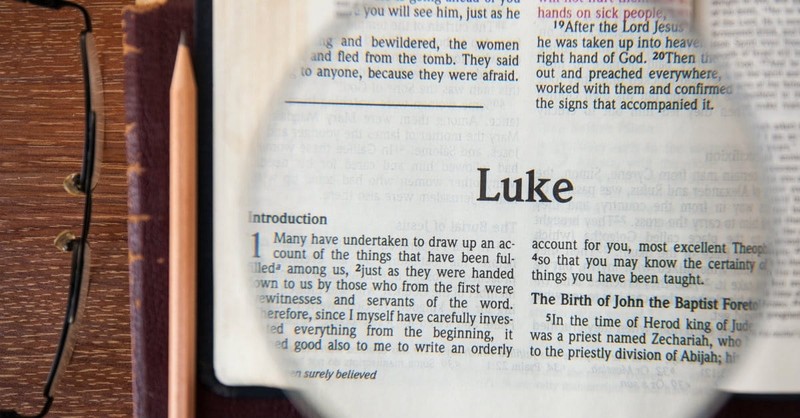
Devotion – Luke 7

S – Then John’s disciples told him about all these things. So John summoned two of his disciples 19 and sent them to the Lord, asking, “Are you the one who is to come, or should we expect someone else?” 

Luke 7:18–19 CSB

O – John is in prison.  He was full of the Holy Spirit.  He preached a message of repentance and adhered to the commandments.  He did everything right.  Now, he is imprisoned and the Messiah that he proclaimed hasn’t established His kingdom and does things differently than John expected.  So he asks – “Are you the one?”

A – If I took John’s name out, I can insert anyone’s name today.  Many people are following God and doing a lot of things right.  Then, God throws or allows a curve ball in the mix.  What do you do with that?  Do you question if God is real or do you continue on in faith?  Jesus goes on to say that there is no human greater than John the Baptist…and he doubted God at times.  We are not alone in our challenge and doubt.  But we do have to make a choice.

R – Lord, I thank you that you have a plan and purpose for my life that is good.  Even when I don’t see it, help me to continue to grow my faith and trust in you.  I choose you, no matter the circumstances or what I see. 

Devotion – Luke 6

S – But I say to you who listen: Love your enemies, do what is good to those who hate you, 28 bless those who curse you, pray for those who mistreat you

Luke 6:27–28 CSB

O – Commentary:  The *Old Testament specifically commanded love of neighbor (Lev 19:18), but neither it nor Jewish sages commanded love of enemies (although many taught nonretaliation and insisted on leaving vengeance to God).

The IVP Bible Background Commentary: New Testament

  –  Enemy:  ĕchthrŏs, ; hateful ; usually as a noun, an adversary (espec. Satan):— enemy, foe.

The New Strong’s Dictionary of Hebrew and Greek Words 

   – “Love” – agape love – unconditional love.

 *  Jesus is applying the Levitical command to love your neighbor but giving it a new definition.  It was for all people – those who were for or against us.  The true character of God is for all mankind, who he created and loves.

A – Who is your foe today?  While the devil is your adversary that you do spiritual battle against every day, the person in your life that is contrary, challenging and difficult is not.  Each of us has people who go against us.  We need to love them unconditionally with healthy boundaries.  

R – Lord, help me to love each person I come in contact with today.  Let me demonstrate your character in love and compassion while also stewarding the gifts and calling you have given me.

Devotion – Luke 5

S – While he was in one of the towns, a man was there who had leprosy all over him. He saw Jesus, fell facedown, and begged him, “Lord, if you are willing, you can make me clean.” 

13 Reaching out his hand, Jesus touched him, saying, “I am willing; be made clean,” and immediately the leprosy left him.

Luke 5:12–13 CSB

O – Commentary:

  • haptŏmai, to attach oneself to, i.e. to touch — touch.

           The New Strong’s Dictionary of Hebrew and Greek Words

  • covered with leprosy (lit., “full of leprosy”). Perhaps he was in the final stages of leprosy—a fact that would have been easily discernible in the man’s home community. The Law (Lev. 13) commanded strict segregation of a person who had leprosy, for it was a graphic picture of uncleanness. A leprous person could not worship at the central sanctuary; he was ceremonially unclean and therefore cut off completely from the community.

             “Luke,” in The Bible Knowledge Commentary: An Exposition of the Scriptures

  *  Recognizing that this man for some time in his life was shunned from society.  He wasn’t allowed in the sanctuary, to be in groups of people or even in close proximity to a person.  Jesus not only “touched” him, but Jesus “attached” himself to him.  It was more than a glancing touch of an extended finger.  Maybe it was a firm grasp on the shoulder or a hug.  The person who knew no contact for so long was given the embrace of His Messiah.

A – God isn’t a mere “touch” in our lives.  He wants attachment.  He wants a relationship.  He desires to bring the person close who is far removed from the community.  Sometimes, that is physical distance.  Other times, it is the mental or social distance that we impose on ourselves. The key is for us to approach God with the desire to “close the gap” between us.

R – Lord, help me to be aware of the times I pull away from being close to you.  Do not let my thoughts, emotions or circumstances cause distance to form between us.  Let me “attach” myself to you today.

Devotion – Luke 4

S – He then rolled up the scroll, gave it back to the attendant, and sat down. And the eyes of everyone in the synagogue were fixed on him. 21 He began by saying to them, “Today as you listen, this Scripture has been fulfilled.

Luke 4:20–21 CSB

O – Commentary: Writers of the Dead Sea Scrolls, who believed that they lived on the verge of the end time, often stressed the immediacy of biblical prophecies, applying descriptions of Nahum, Habakkuk and others to their own day. Interpreting the Bible this way was thus not in itself offensive to first-century Palestinian Jews; the offense was implying that God’s end-time activity had arrived in Jesus’ own ministry

The IVP Bible Background Commentary: New Testament

A – Jesus changed the normal, everyday life.  The words he read were the hope of all Israel – a messiah was coming to save them and set them free.  They just didn’t want it to be him.  They envisioned something or somebody else.  Their vision put Jesus “in a box” – their box.  I can do that too.  Put God’s will or purpose in my own viewfinder and struggle with His plan.  I need to invite the Holy Spirit to open my heart to what He is doing.

R – Lord, help me to see through your eyes today and know your will.  Help me to feel what you feel today and have a heart of compassion.  And give me the strength and courage to do what you call me to do today to fulfill your purpose in my life.  

Devotion – Luke 3

S – Tax collectors also came to be baptized, and they asked him, “Teacher, what should we do?” 

13 He told them, “Don’t collect any more than what you have been authorized.” 

14 Some soldiers also questioned him, “What should we do?” 

He said to them, “Don’t take money from anyone by force or false accusation, and be satisfied with your wages.” 

Luke 3:12–14 CSB 

O – Commentary:  Tax collectors, notorious for their dishonesty in collecting more than required and pocketing it for themselves (cf. 5:27–32), exemplified the need for honesty. And soldiers, known and hated for always trying to get more money (by extorting it and blaming others for it), were examples of the need to be content and gentle.

The Bible Knowledge Commentary: An Exposition of the Scriptures

God is already shifting culture by using these two examples.  He talks to the common Jewish person, then the tax collector (Jewish disliked) and Roman soldier (Gentile with authority).  He didn’t tell the two abhorred people to do a different job or change allegiance.  Instead, he told them to do their job with honesty and contentment.

A – God meets us where we are at and causes us to change.  God can use you right where you are at to be a “voice” in your workplace, community or groups.  You may be the only “Christian” voice in that group.  Use it in a way that honors Him.

R – God, help me to use my voice as an authentic Christian.  Let truth, contentment and humility be my foundation as I honor you in all situations today.

Devotion – Luke 2

5 Things to Know about Luke from the Bible

S – Luke 2:29–32 (CSB): Now, Master, you can dismiss your servant in peace, 
as you promised. 30 For my eyes have seen your salvation. 31 You have prepared it 
in the presence of all peoples—32 a light for revelation to the Gentiles, 
and glory to your people Israel.

O – Commentary:  Luke 2:27–32 (BKC): 2. On seeing the Child and picking Him up, Simeon … praised God, the response of godly people toward the Messiah throughout the Gospel of Luke. He then uttered a psalm of praise extolling God for fulfilling His promise by bringing salvation. The Messiah is the Source of salvation, as His name Jesus indicates. In all three of the hymns of thanksgiving and praise recorded by Luke in his first two chapters (1:46–55, 68–79; 2:29–32) lie the deep significance of the births of John and Jesus for the salvation of Israel and the world. Simeon noted that the Messiah was to be for the Gentiles as well as for Israel. The idea of salvation for the Gentiles is set forth many times in the Gospel of Luke.

A – Love the gratitude for salvation.  While we have had it “available” our entire lives, there were those who longed and pined for it to come. We should be just as grateful.  Also, seeing the Gentiles included in the plan of salvation shows that it was part of God’s larger plan.  Jesus was going to wreck the whole culture and set it up to change the world.

R – Lord, I am grateful for your salvation.  I never want to take for granted all that it cost for me to have a relationship with you.  Thank you for redeeming me.

Devotion – Luke 1

5 Things to Know about Luke from the Bible

S – Luke 1:13–17 (CSB): But the angel said to him, “Do not be afraid, Zechariah, because your prayer has been heard. Your wife Elizabeth will bear you a son, and you will name him John. 14 There will be joy and delight for you, and many will rejoice at his birth. 15 For he will be great in the sight of the Lord and will never drink wine or beer. He will be filled with the Holy Spirit  while still in his mother’s womb. 16 He will turn many of the children of Israel to the Lord their God. 17 And he will go before him in the spirit and power of Elijah, to turn the hearts of fathers to their children, and the disobedient to the understanding of the righteous, to make ready for the Lord a prepared people.” 

A – Luke 1:14–17 (BKC): The angel not only gave the name of the son, but also detailed six aspects of John’s character.

  1. He will be a joy and delight to you (v. 14). Luke frequently used the word “joy” in his accounts in Luke and Acts, often linking it closely with salvation.
  2. He will be great in the sight of the Lord. The expression “in the sight of” (enōpion) is characteristic of Luke. Though it appears 35 times in Luke and Acts, it is used only one other time in the other Gospels (John 20:30).
  3. He is never to take wine or other fermented drink. Later John voluntarily took on himself a Nazirite vow, refusing to drink anything fermented (Num. 6:1–21). Luke did not specifically state that John would fulfill all aspects of the Nazirite vow. Instead, John would avoid taking any wine perhaps to support his contention that his message was urgent. Another way he emphasized the urgency of his message was to dress, act, and eat like Elijah the prophet (cf. Matt. 3:4; 2 Kings 1:8).
  4. He will be filled with the Holy Spirit even from birth. “From birth” is literally “from his mother’s womb.” When Mary visited Elizabeth before John was born, the baby leaped in her womb. The ministry of the Holy Spirit was important to Luke, and he often went to great length to show His empowering and enabling ministry. Both of John’s parents were filled with the Spirit (Luke 1:41, 67).
    Luke 1:14–17
  5.  Many of the people of Israel would he bring back to … God. Crowds of Israelites did turn to the Lord through John’s ministry (Matt. 3:5–6; Mark 1:4–5).
  6. He will go on before the Lord. John the Baptist was the Lord’s forerunner, announcing His coming in the spirit and power of Elijah. Luke here referred to two passages in Malachi which speak of messengers: a messenger was to be sent to clear the way before the Lord (Mal. 3:1), and Elijah’s return was promised before the day of the Lord (Mal. 4:5–6) to restore the hearts of the fathers to their children.

A – We often hear of Jesus’ fulfillment of prophecy and relation to the Holy Spirit.  Interesting that John also centered in both.  It elevates that John being fully human, was an essential person in the transition of OT relationship with God and the new covenant he helped usher in.

R – Lord, let me live today in a way that honors the past culture and tradition of the early church.  Let me do that by being in complete unity with your Holy Spirit in all that I think, say or do today.

Devotion – Romans 16

S – Romans 16:19–20 (CSB): The report of your obedience has reached everyone. Therefore I rejoice over you, but I want you to be wise about what is good, and yet innocent about what is evil. 20 The God of peace  will soon crush Satan  under your feet. The grace of our Lord Jesus be with you. 

O – Romans 16:17–20 (BKC): But he was concerned that they be wise about what is good, and innocent about what is evil (kakon). The word for “innocent” is akeraious, “unmixed, simple, pure.” In Greek it was used of wine that was not diluted and of metal that was not weakened in any way. The word is used in the New Testament in only two other places: Matthew 10:16 (“innocent”) and Philippians 2:15 (“pure”). Christians should be innocent about evil, not following the ways of the world (Rom. 12:2).

A – We need to be wise in the things that honor God.  Wisdom goes toward application in knowledge, intellect and best practice.  Action and intentionality is important.  Pure in regard to evil isn’t naive.  It means distance and abstinence in these areas.  All of this is easier said then done.

R – Lord, help me to do this today.  Honor you with applied intentionality in doing your will and purpose today, while running away from the things that don’t honor you.

Devotion – Romans 15

S – Romans 15:3 (CSB): For even Christ did not please himself. On the contrary, as it is written, The insults of those who insult you have fallen on me.

O – Romans 15:1–4 (BKC): Also the strong should not seek to please themselves. This last clause is the key; a Christian should not be self-centered, but should be concerned about the spiritual welfare of others. Pleasing others, however, is not the end in itself, but is for their good, to build them up (lit., “unto edification”; cf. “edification” in 14:19). This is the example the Lord Jesus Christ left. Even He did not please Himself. He came “to do the will” of the Father who sent Him (John 4:34) and to please Him (John 5:30; 8:29). To support this statement Paul quoted a part of a verse from a messianic psalm (Ps. 69:9). Christ was insulted by others because of His associations with God the Father.

A – Christ is our example of valuing others.  We want to do it until we have to pay a price for it. (See part of verse – the insults of others have fallen on me.)  Focusing on doing God’s will and purpose each day helps keep the focus on what is good, even when the voices around it are challenging.

R – Lord, help me to do this today without complaints.  Let me value others first and my own aspirations will be accomplished in your timing.